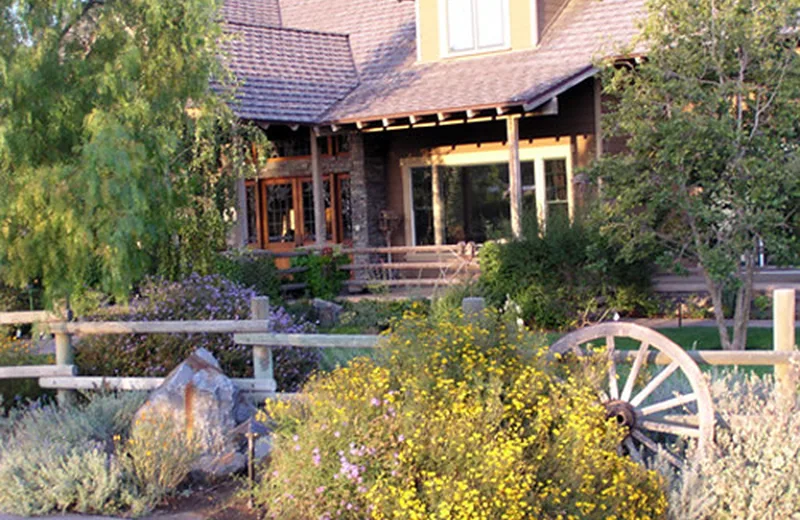
Landscaping is one of the most seasonal trades in construction: the vast majority of projects are planned and carried out in spring and summer, when conditions allow ground preparation, planting or laying a terrace. Between routine maintenance (hedge trimming, mowing, small jobs) and full-scale design projects (garden creation, terracing, terrace or fence installation), the gap in project value is considerable — much wider than in most other trades.
This guide is for landscaping and outdoor design companies considering buying leads: what it costs, how to judge lead quality when project scope varies this widely, and which legal framework applies in Switzerland.
Why buy landscaper leads in Switzerland
Demand for landscaping follows a sharp seasonal pattern: searches and quote requests rise sharply as soon as the weather turns, once homeowners start thinking about their outdoor projects for the season. A company that wants to fill its order book needs to be visible at exactly that moment — miss it, and you risk losing a large share of the year's demand, which is concentrated into just a few months.
Buying leads lets you absorb that demand spike without relying solely on word of mouth or an advertising presence that's costly to maintain year-round. It's also a way to balance workload: a lead provider can route both routine maintenance requests (to keep crews busy during quieter stretches) and larger design projects (to lock in revenue during peak season).
How much does a landscaping lead cost in Switzerland
The price of a landscaping lead varies more sharply by project scope than in almost any other trade: a hedge trimming or regular mowing request doesn't carry the same commercial value as a full garden design project with terracing, which represents a very high-value job. Price also depends on exclusivity level, region and season — demand is noticeably stronger in spring and summer.
In this market, the price gaps observed in Switzerland are wide: a shared, loosely qualified routine-maintenance lead sits at the low end, while a well-qualified exclusive lead on a large-scale design project costs considerably more. These gaps depend heavily on the provider, the volume ordered, the service type and the time of year. The only reliable way to get a number for your business is to request a detailed, no-obligation quote before starting.
- Small maintenance (hedge, mowing, minor jobs): lower-cost lead, potentially high volume in peak season.
- Design project (garden, terracing, terrace): significantly higher-cost lead, in line with the project's value.
- Seasonality: pricing and available volume vary sharply between peak season (spring-summer) and the rest of the year.
- Exclusivity: particularly worthwhile on high-value design projects, less so on routine maintenance.
How to judge the quality of a landscaping lead
More than in most other sectors, qualifying by project scope is what matters most here: a well-qualified lead should specify whether it's a one-off or recurring maintenance job, a mid-size project (fence installation, small terrace) or a full garden design project — ideally with an indication of surface area and planned budget. Without that information, it's hard to tell whether the lead matches your business's positioning.
Beyond these declared criteria, the real test of quality plays out over time: what share of leads turns into a site visit, then a signed quote? A good provider is willing to share average conversion rates and lets you benchmark your own results against them. Be wary of leads with no indication of project scope: a 'garden quote' request with no further detail could just as easily be a one-off mowing job as a full terracing project, which makes after-the-fact qualification time-consuming.
- Project scope: one-off maintenance, recurring maintenance, mid-size project or full garden design.
- Area involved: even a rough indication strongly signals how commercially relevant the lead is.
- Seasonal timing: a lead captured in peak season generally shows stronger purchase intent.
- Number of quotes already requested: a customer comparing 2-3 companies is following standard practice in this sector.
Exclusive or shared leads: a trade-off that depends on project scope
A shared landscaping lead is sent to several companies at once: for small maintenance jobs (hedge trimming, mowing), the amount at stake stays limited and a shared lead can be enough, especially since customers typically compare a few local providers before choosing anyway. For a full-scale design project, though, the project's value makes a stronger case for an exclusive lead: the price is higher, but you avoid preparing a detailed quote (design, materials and labour costing) in head-to-head competition with other companies on the same project.
Many landscaping companies mix both approaches depending on the request: shared leads to keep crews busy on maintenance volume, exclusive leads to secure the high-value design projects that justify a bigger sales investment.
Legal framework: nLPD and consent
In Switzerland, any lead purchase must comply with the federal data protection act (nLPD). Every customer whose details you receive must have given explicit consent to be contacted by a landscaping or outdoor design company — and that consent must be tracked by the lead provider, not simply claimed.
Before buying, check that the provider can demonstrate the origin of consent (form, checkbox, timestamp) and that it doesn't resell the same data to an unlimited number of companies without disclosing it. As the receiving company, you remain responsible for how you handle the data you receive: keep it only as long as needed to process the request, and respect the customer's right to opt out of further contact.